Horn’s House
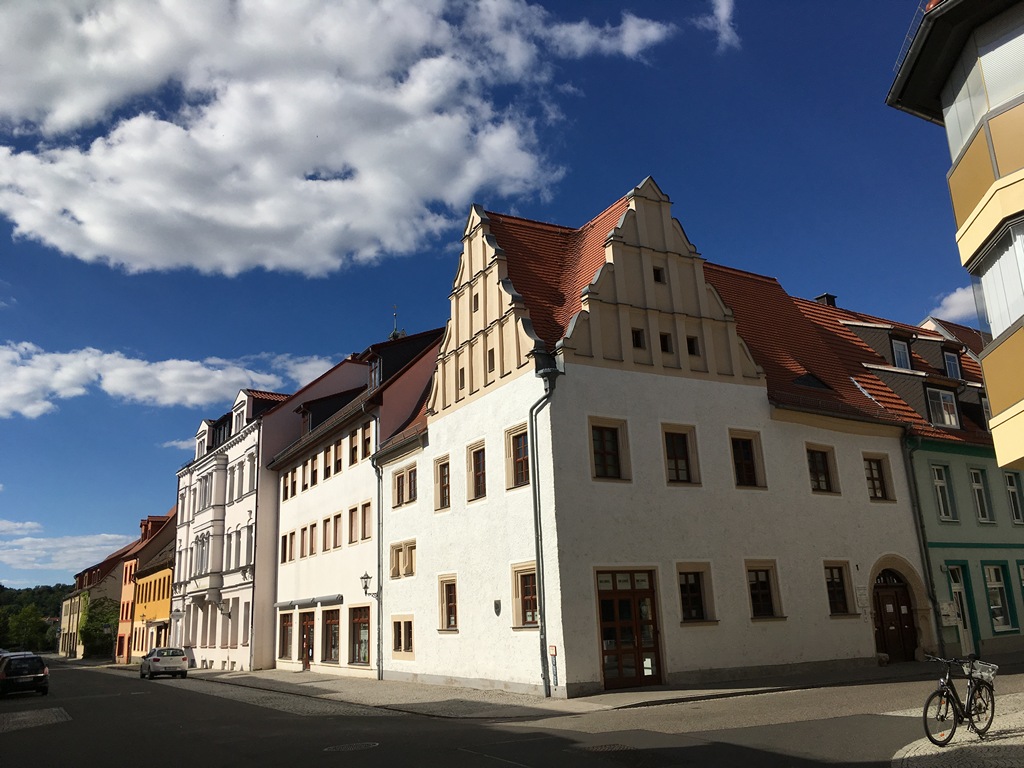 Horn's house is one of the oldest profane buildings, if not the oldest residential building in the city.
The Renaissance facade conceals a Gothic residential tower, which is unique in Saxony. The Renaissance gables were probably added around 1542 and are very similar to those of the town church and the old town hall. The round-arched portal made of Rochlitz porphyry dates from 1621 with the initials "MAW", these stand for the former Borna dean Magister Andreas Walter, who acquired the house in 1620.
Another well-known name for this building is "Altes Kloster". It will probably remain a mystery how this name originated, as Borna never had a monastery, nor was there a Terminei (term from the medieval mendicant orders) here, as was assumed around 1520. Nevertheless, there are many legends surrounding the building.
It is said that there is an underground passage between this building and the church, but this has not been confirmed to date. But it remains a beautiful story, and the writer Sophie Reuschle (1891-1982), who grew up in the house opposite, created an eternal memorial to this building with its underground passageway, as well as to her hometown Borna, in her book "Kinderzeit" (Childhood).
It is also worth noting that the pedagogue and writer Martin Hayneccius was born in this house on August 10th 1544. He became famous for his Latin school comedies, which he translated into German for the first time and published, quote: "so that they can be understood and usefully read and acted upon by the common man."
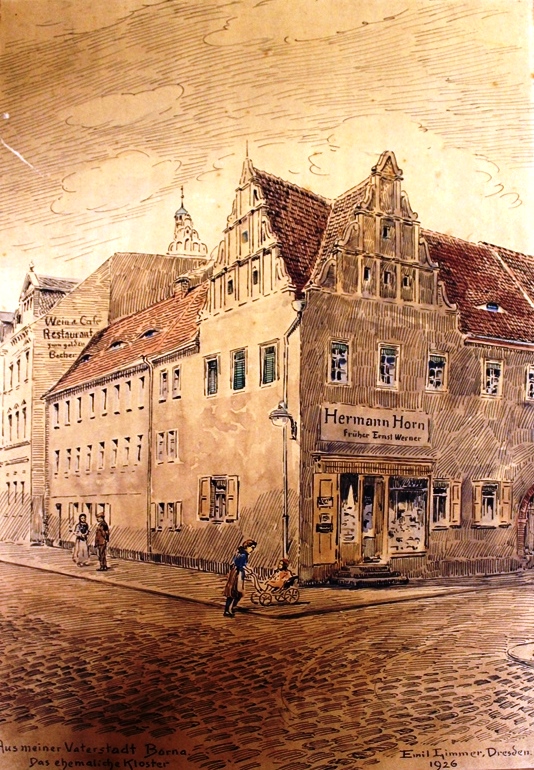
Horn’s House